

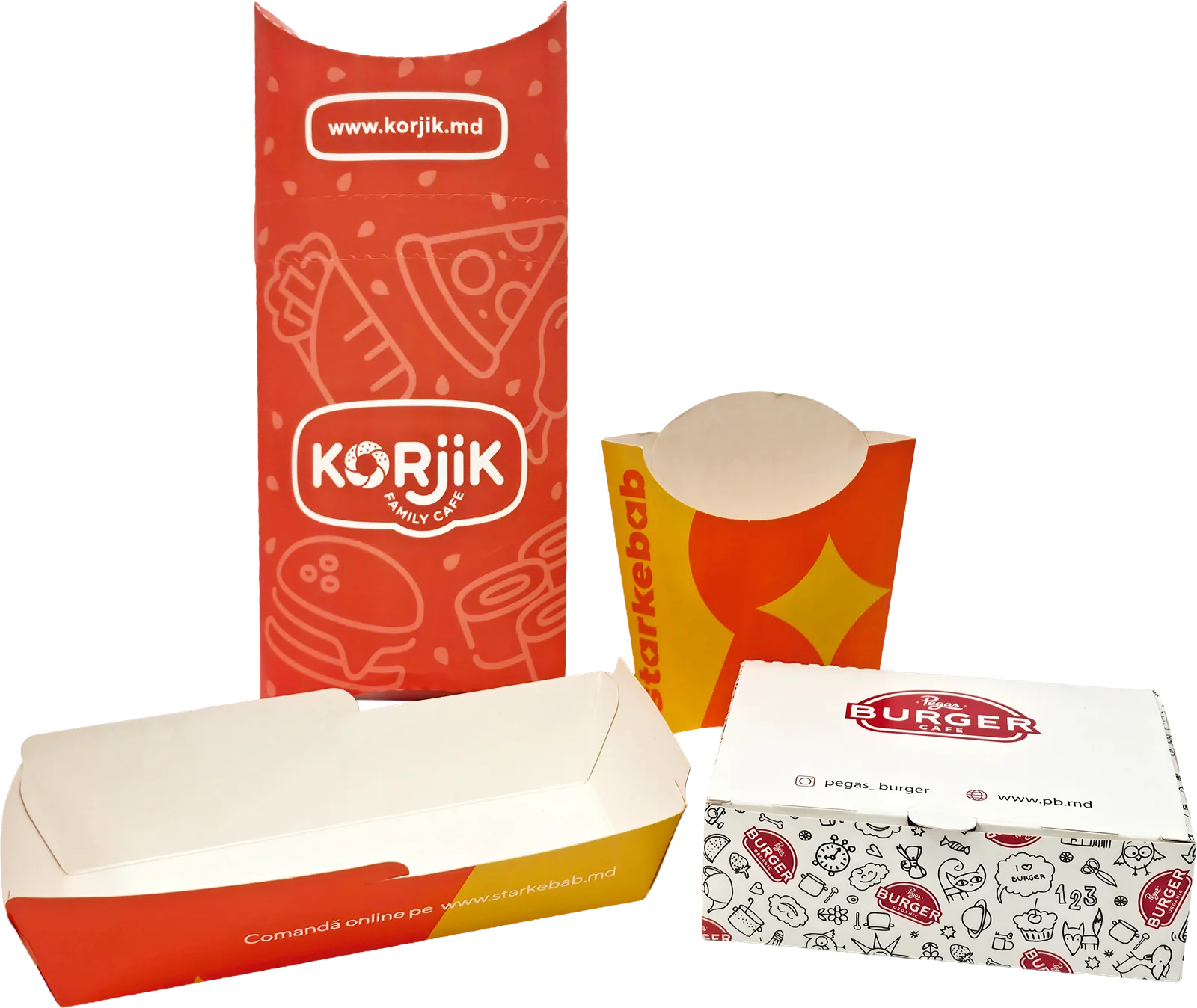
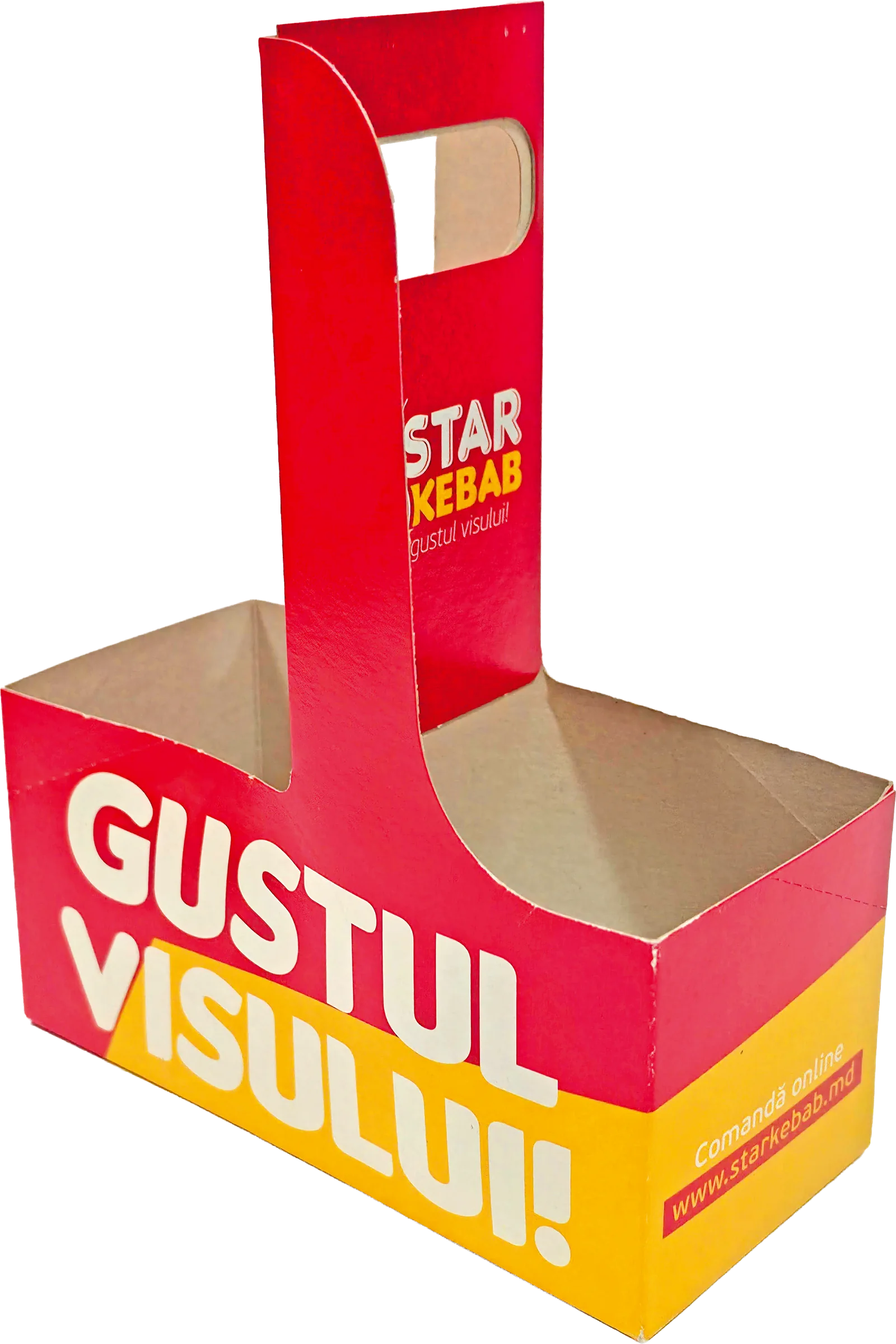
The task. The Star Kebab fast-food chain (Chișinău) needs disposable cardboard packaging for dine-in and delivery: French-fries packaging, a “baby box” for the kids’ meal, and trays. Packaging like this is ordered again and again.
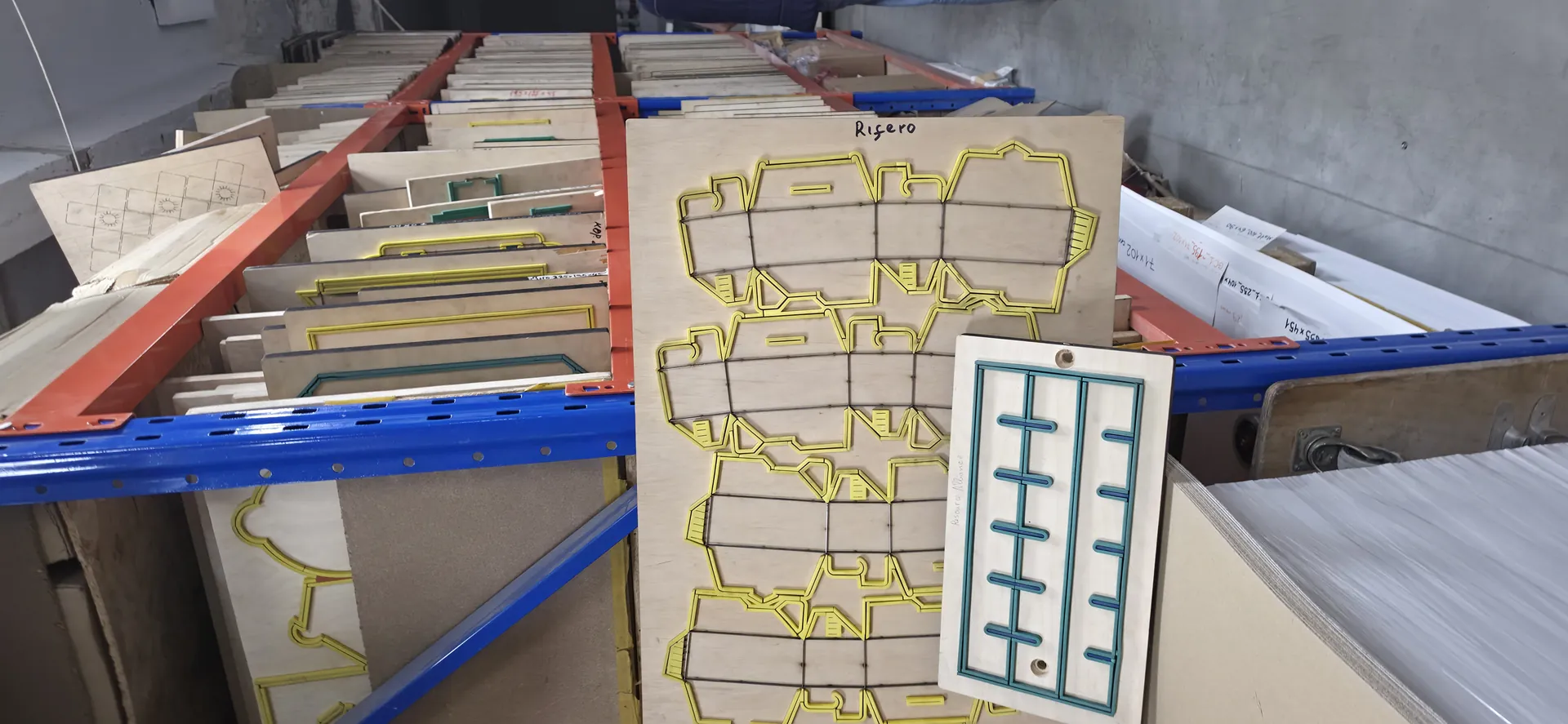
The solution. Self-locking boxes and trays die-cut with our own dies. The dies and the technical specification of every item are kept in our production system, so a repeat order starts without a new quotation or make-ready.
The result. Star Kebab has been working with us since 2014 — 103 orders. French-fries packaging runs at 50,000 pcs per run, and a repeat run of 5,000 baby boxes in January 2026 took 13 days from order to dispatch.
Order parameters
| Parameter | Value |
|---|---|
| Client | Star Kebab SRL, fast-food chain, Chișinău |
| Working together | since 2014 — 103 orders |
| Products | French-fries packaging, a “baby box” for the kids’ meal, trays |
| Structure | self-locking boxes and trays die-cut with our own dies |
| Baby box size | 210×125×110 mm |
| French-fries packaging runs | 50,000 pcs per run: August 2024, February and June 2025, January 2026 |
| Baby box runs | six runs of 3,000–5,000 pcs since 2024 |
| Tray runs | 10,000–22,000 pcs |
| Lead time | 5,000 baby boxes (January 2026) — 13 days from order to dispatch; 50,000 French-fries packs (January 2026) — 28 days |
The figures come from the technical specifications of 2024–2026 orders in our production system.
How the work went
- Structure and die. The boxes and trays are self-locking and die-cut with our own dies. The baby box for the kids’ meal is 210×125×110 mm.
- Technical specification. Before an order goes to the shop floor, the system fixes its technical specification: board grade and grammage, printing sequence and inks, cutting die number, gluing scheme, how the goods are packed for transport. The shop floor executes a document rather than “remembering how it was done last time”.
- Repeat order. The manager confirms the quantity and production takes the previous order’s job card. The die, the layout and the colour proof are already in the system — nothing is re-engineered.
- Warehouse and dispatch. Finished goods are booked into the warehouse when the last operation closes, and dispatch runs against an exact stock balance.
Steps 2 and 4 are the standard routine for any order; see the “Order process” page for details.
Why it works
A repeat is the fastest scenario: the die exists, the artwork is approved, the job card is in the system — there is nothing left to re-approve. Star Kebab is not an exception: 60% of all our orders are created as a copy of the same client’s previous order, and 93% of orders come from clients who have worked with us before.
Have a similar task?
Email contact@pergament.md or call +373 79 044 417: send your portion size or a sample pack and the quantity — our technologist will propose the construction and an operation-by-operation quote. Want to hold the box before the run? We cut a sample on the plotter: box prototype from 30 minutes.
More about the products: “Fast food and delivery packaging” and “French fries boxes and trays”. More stories with figures — all case studies.